


Star Iliad uses a “Heart” system to display player health – which is a marked change from Phoenotopia’s “HP”. Today, I’ll explore why that is. Did we consider other health systems? And is using Hearts simply a cosmetic decision or a major change that will shape the game design fundamentally?
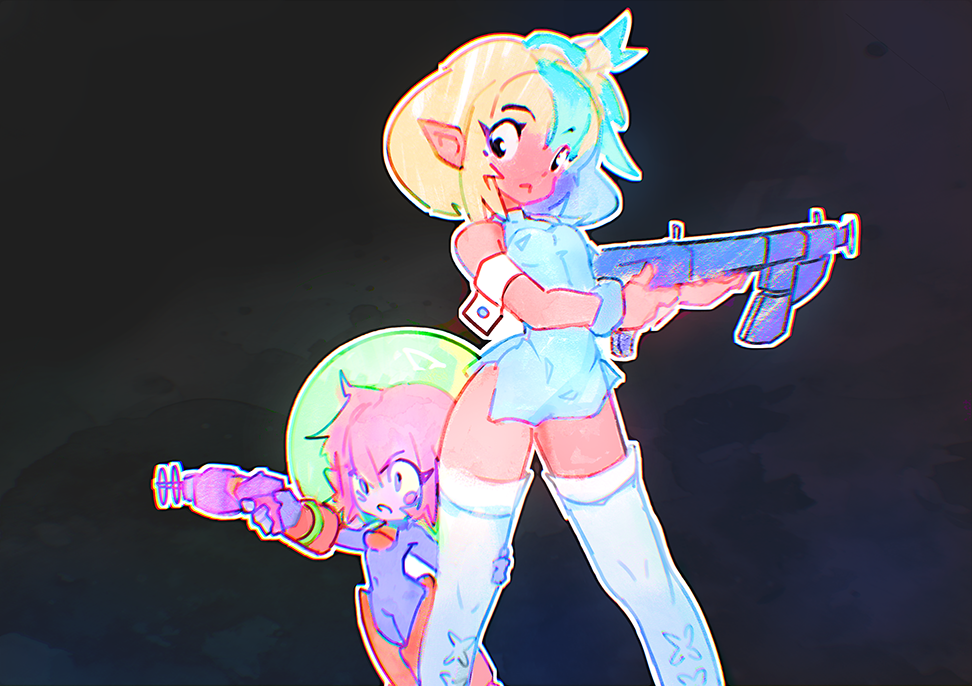
(What if, like in classic Mario, Blythe shrunk whenever she got injured?)
Misc Thoughts as a Youth
My opinions on health systems have changed a lot over the years.
As a kid, Super Mario World and Zelda: Link to the Past were my baseline. They were among my first games, so I took their health systems for granted. I didn’t think they were “cool.”
The first time I thought a health system could be cool was when I saw the health bars in Megaman X. For the first time I had a direct window into the boss’s health. The moment the boss appeared and his massive HP bar filled up, you knew you were in for a fight.
You started with a small HP bar, while the boss’s HP bar was huge. That meant he was dangerous. And that’s cool.
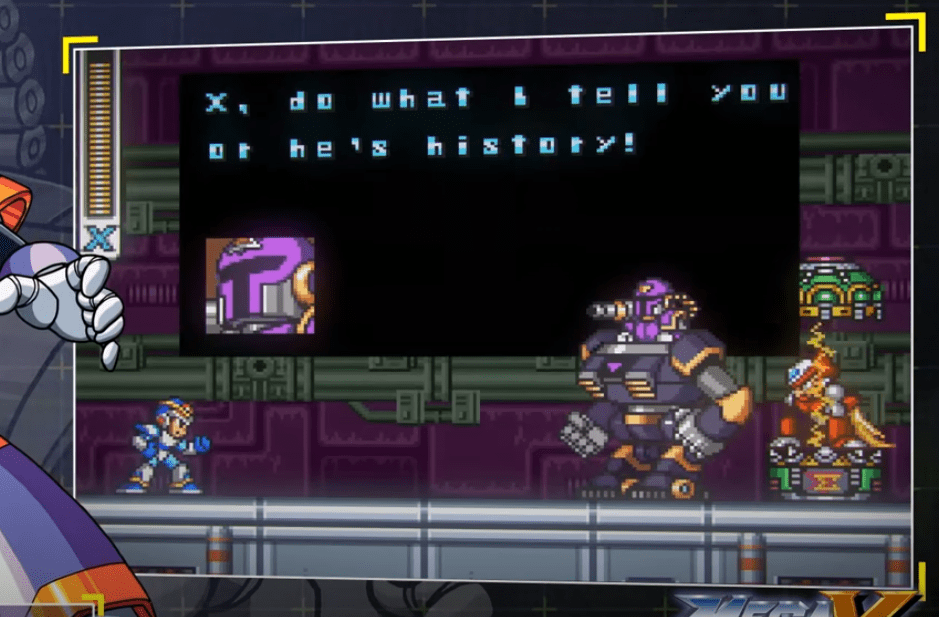
(As elementary school kids, I remember excitedly talking about Mega Man X with a friend. Lacking the canonical terms to talk about it, he called the HP bar “Blood.” He’d say, “Use the volt attack on the Octopus,” then spread his arms wide, “it’ll knock out this much Blood.”)
Later, around the time of Final Fantasy VIII, HP became my favorite system. There was nothing cooler than watching Squall land a flurry of hits and seeing numbers explode across the screen:
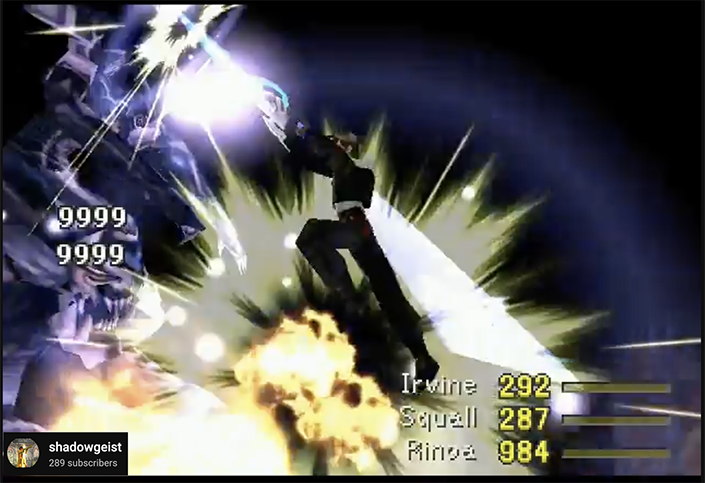
(9999, 9999, 9999!)
Phoenotopia uses HP
HP held its crown as the coolest health system in my mind for many years hence. Thus, by the time we were making Phoenotopia, it was a matter of course that we’d use the HP system.
The benefits of HP are numerous.
For one, crystal clear readability. Damage numbers are a universally adopted standard – the player instantly understands how effective an attack is when that number pops up on screen.
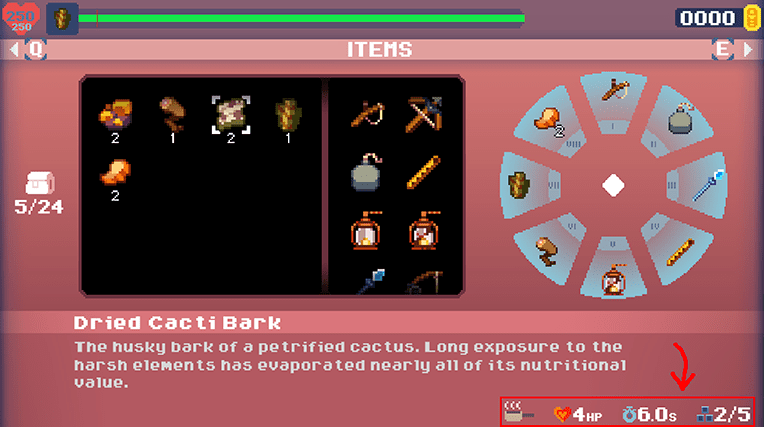
Phoenotopia’s healing items gained flavor too. Small items took up less inventory space, healed a little bit, but quickly. Vice versa for big items. We could mix those values to create different tiers of healing items, which added variety and richness to the game world.
High amounts of HP allowed fine-tuned damage control. For example, a tiny bee sting could deal 1 HP of damage whereas a giant’s club swing could deal 100 HP damage.
However, all that abundance comes with a potential downside if the designer isn’t careful. With so much HP, the player seemed really sturdy, which made me sloppy as a designer. I stopped being careful with the player’s HP because I felt there was so much room to chip away.
That caused me to create areas over-filled with enemies. Or attacks that were obscure and hard to dodge. It wasn’t unheard of for the player to get combo’ed back and forth between multiple enemies.
I didn’t scrutinize these moments more because I’d think, “the player can survive it!”
Survivable or not, no one likes getting hit.
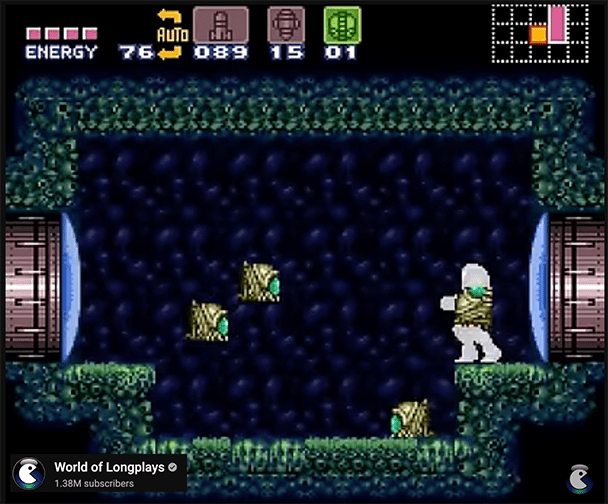
(In Super Metroid’s end game, the player could have 1000+ HP and some enemies would deal only 1 HP of damage. Even so, you’d still swerve to dodge that enemy. Getting damaged is always unpleasant)
Hearts Re-examined
In the late 2010’s, a variety of huge impactful games were using a Hearts display which caused me to re-examine my thoughts on the Hearts-based system. For brevity, I’ll focus on the lessons Hollow Knight taught me.
First, hearts weren’t fractional. You couldn’t lose a fourth of a heart or even half a heart. You’d lose a whole heart, every time. This meant that you could only tank 5 hits at the start. And this rule was strictly upheld for much of the game (double-heart dealing enemies came much later).
At first, it seemed like over-simplification – I wasn’t sure I liked it. But as I got further into it, I saw the merits of this approach.
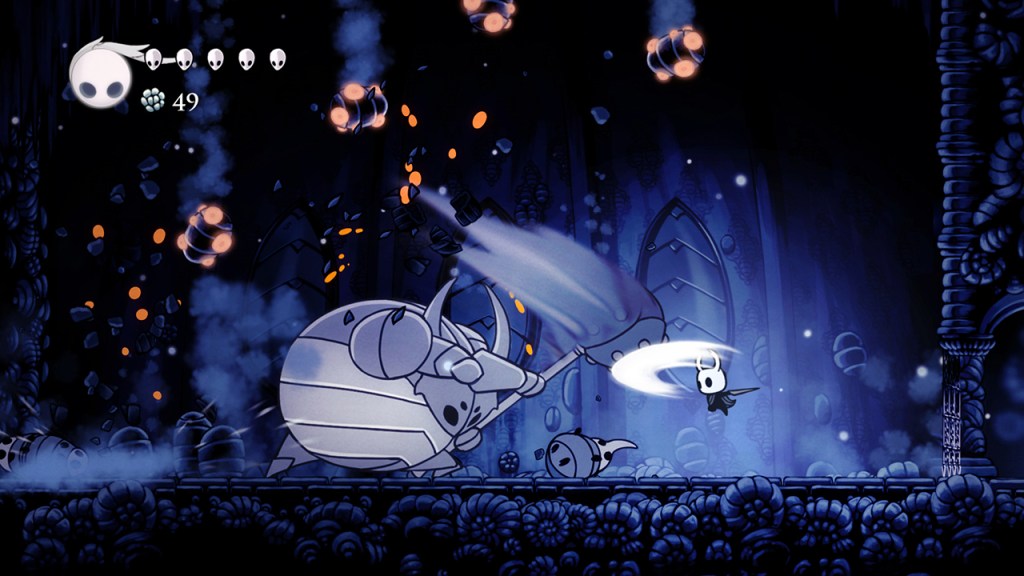
(Technically, they’re called “masks”, but we’ll call them hearts for this blog post)
It wasn’t that hearts were simple – rather, they were big, round, and impactful. I remember the joy of the first heart upgrade – going from 5 to 6 hearts felt like a huge moment. It brought back fond memories of a card game I used to play with my roommates called Bang! Note how in the below picture, Bang’s health card also shows 5 lives. It seems a base of 5 is tried and true.
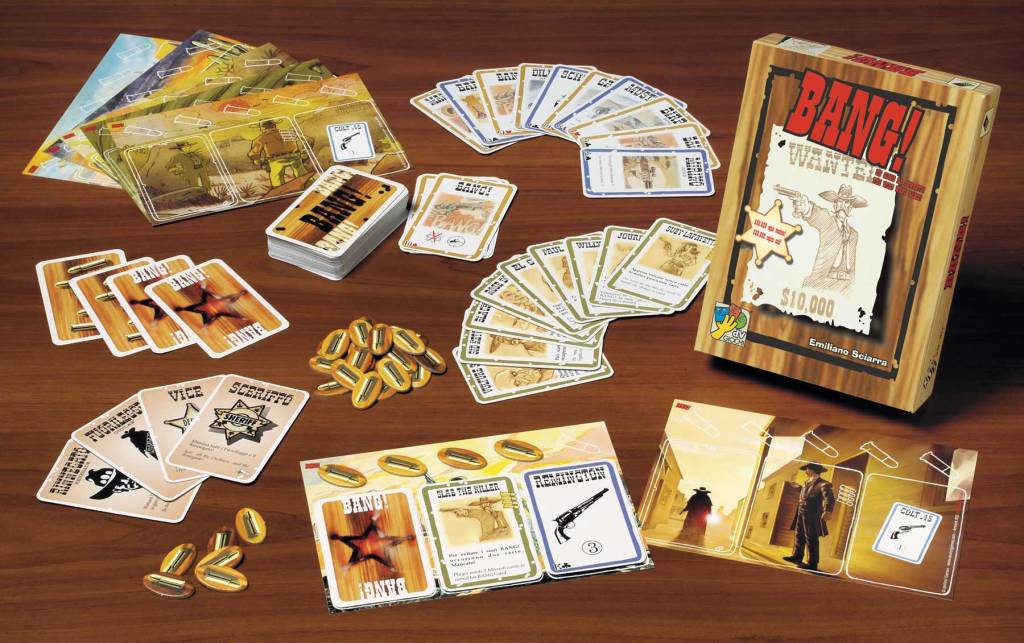
(A game of Cowboys vs Outlaws. The attack card was called “Bang!” So whenever you attack someone, you’d say, “I bang you”).
The other half to the fewer hearts design was the “economy” around health. Enemies didn’t drop healing items randomly – rather, healing was dependent on gaining a resource called “soul” which replenished at a predictable rate based on how many hits you landed on enemies.
Limiting health and tying survivability to the player’s performance meant the designer had to be hyper-tuned into the player’s health since it could swing in either direction very quickly. It necessitated a level of care and consideration going from moment to moment that was unthinkable to me at the time. All attacks had to be fair and telegraphed. Rooms were filled with a responsible amount of enemies, there were no annoying hard-to-dodge tiny projectiles, and certainly no multi-hit combos.
The way I saw it – a limited hearts-based system was a design that held the designer accountable. It shifted your thinking towards being more responsible and respectful to the player’s health… resulting in a better game!
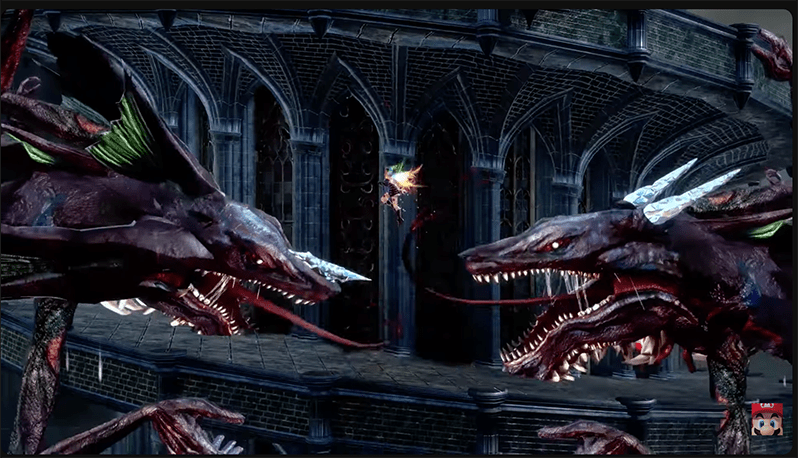
(Not that HP-based games can’t be tightly-designed. Another approach can be gleaned from Koji Igarashi of Bloodstained fame: “the developer who creates the boss must beat their own boss without taking a hit and only using a dagger!”)
HP bars for some – Hearts for Others
All of these design principles steeped slowly – they didn’t affect change in Phoenotopia. But now, in Star Iliad’s dev time, I am ready to make a switch to a Hearts-based system 💪
On the surface, it might seem cosmetic. But the way I’m approaching it, the usage of hearts is a marked pivot in my design philosophy. It’s a commitment to more clearly telegraphed attacks, fairer gameplay, and tighter controls.
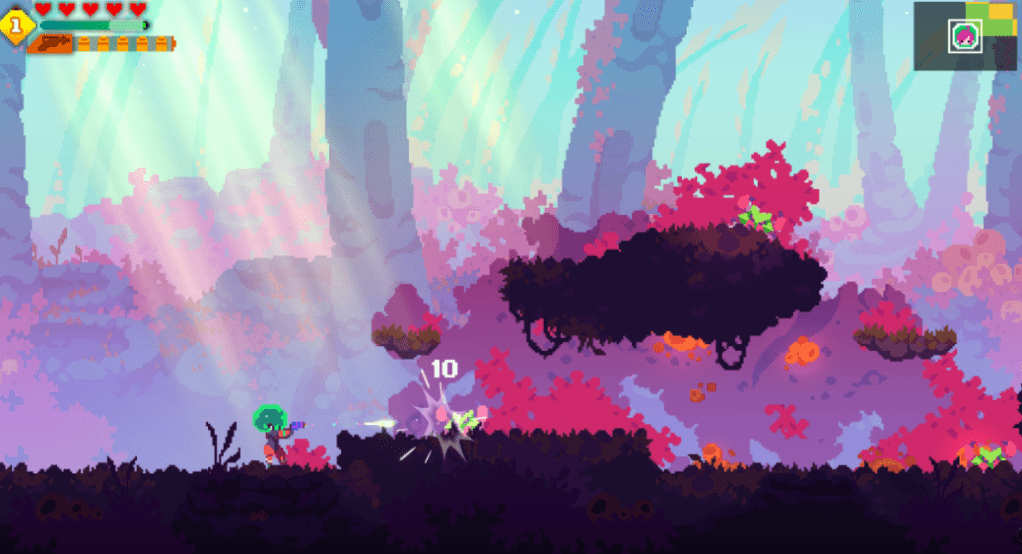
(Hearts for the player. But HP for the enemies)
You might have noticed that in the above shot, there’s a damage number popping off of the enemy. That’s intentional asymmetry. It’ll let us have the best of both worlds.
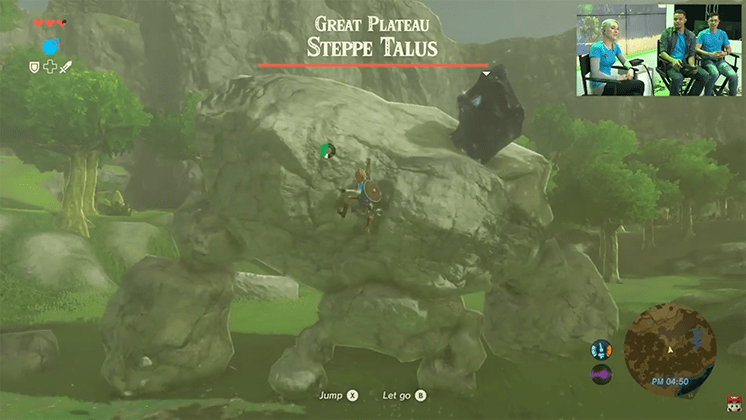
(Asymmetry in design is all around us. Zelda BOTW employs Hearts for Link but an HP bar for bosses)
Perhaps that can be a topic for another time since this blog post has run rather long.
The next update will be at the end of May. Thanks for reading!

 Star Iliad
Leave a comment